
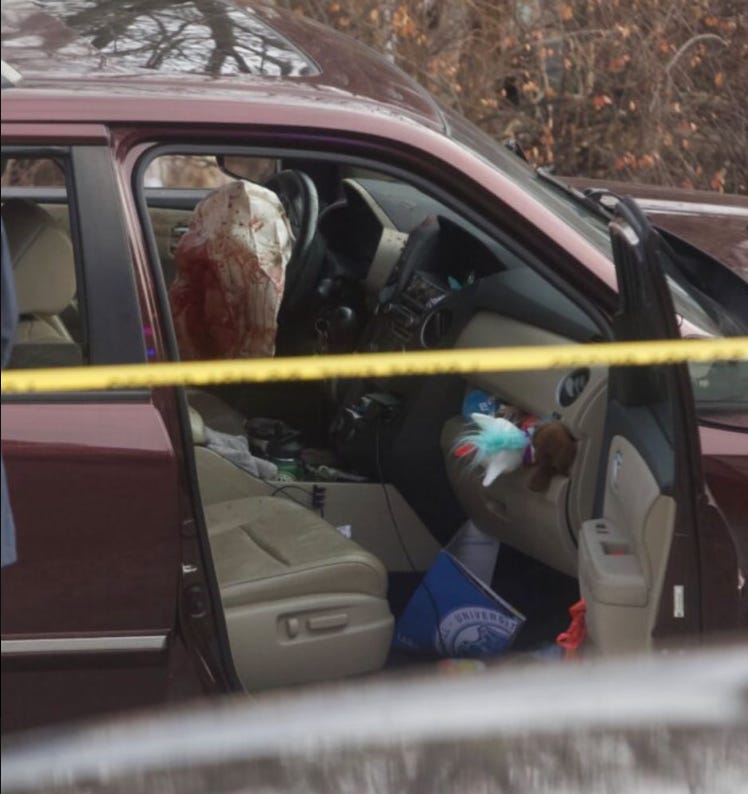
As the media is doing what it does, analyzing videos like the Zapruder film while relying on former federal law enforcement “experts” and talking heads stressing how very complicated this all is, the most important piece of the puzzle is missing: homeland security and ICE’s use of force policies.
I have obtained and am publishing here the two most central policy documents. They are bureaucratically dense and elastic to the extreme, offering every possible excuse for ICE’s killing of Renee Good. But they are also stark in their failure to address any aspect of the dramatically new environment created by ICE’s expanded mission.
What they reveal is that the rules literally have not changed since Trump came into office. This despite the fact that homeland security has completely changed the conditions under which its agencies are operating in America, especially with the twisted claims that it is fighting “domestic terrorism.” The rules as they exist, however, say nothing about protesters, nothing about agents masking up or arming to the teeth, nothing about the arrogant behavior that leads to this chaos, nothing about domestic terrorism.
I asked the Department of Homeland Security about the current rules. “The agency’s current use of force policy is the same as it was in 2023 under President Biden’s administration,” Assistant Secretary Tricia McLaughlin responded.
Thus, as confirmed by homeland security, ICE is operating under a set of use of force policy documents, last updated by Biden administration, documents that legally justify the killing. McLaughlin tells me that there will be an investigation, but the documents affirm that everything hinges on the perception of the officer that he believed he was threatened — which both he and the administration have already affirmed.
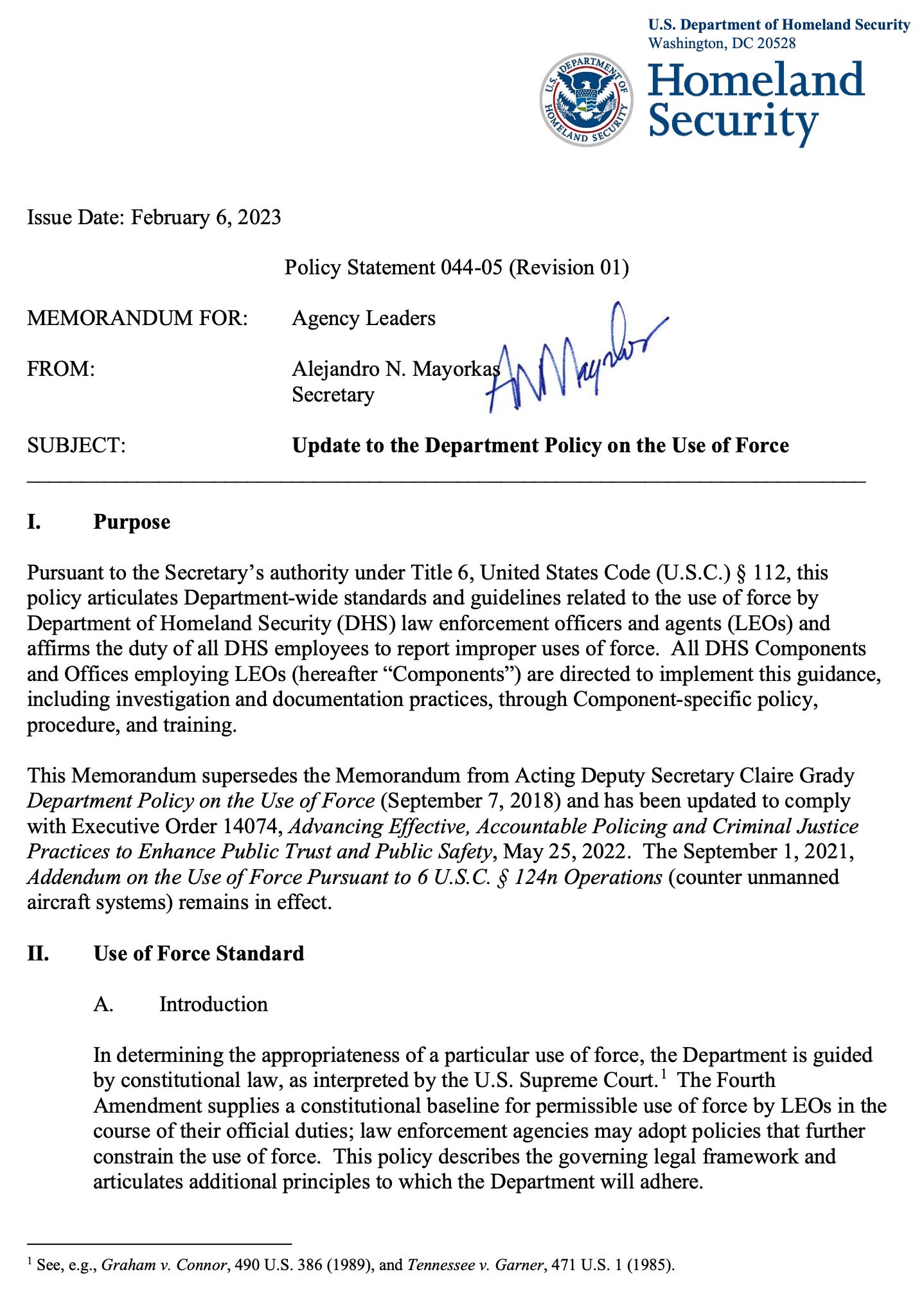

The first document is homeland security’s overall use of force policy, a 13-page document updated in 2023 from a similar 2018 policy.
The 2023 policy clearly responds to conditions in the country at that time and the Biden administration’s perception of the main challenge facing officers out in the field then. It includes, most notably, a ban on chokeholds except when deadly force is authorized, clearly in response to the death of George Floyd. Otherwise it seems quite boilerplate: words like “protester,” “demonstrator,” “civil disobedience,” “riot” and even “civil unrest” don’t appear anywhere.
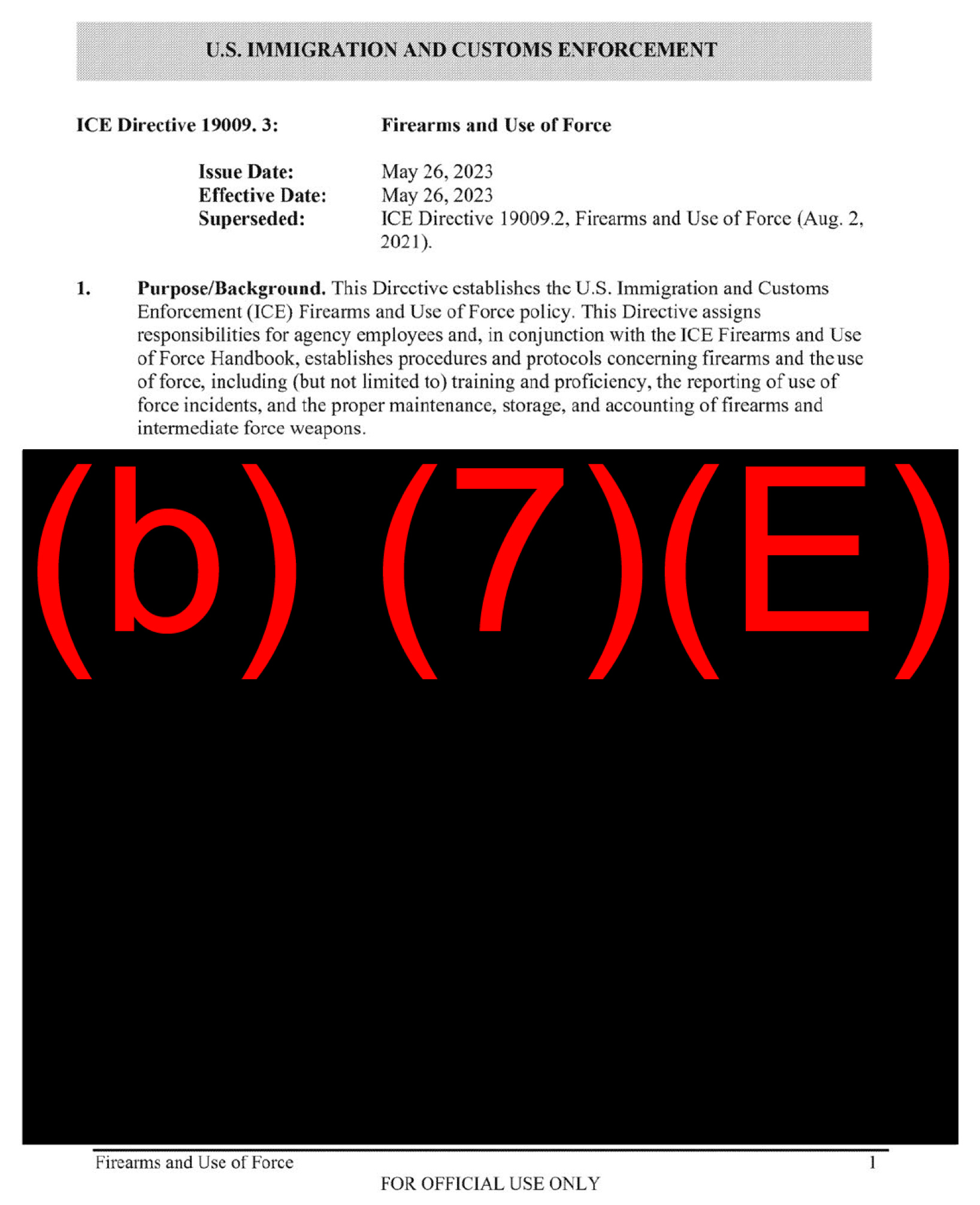
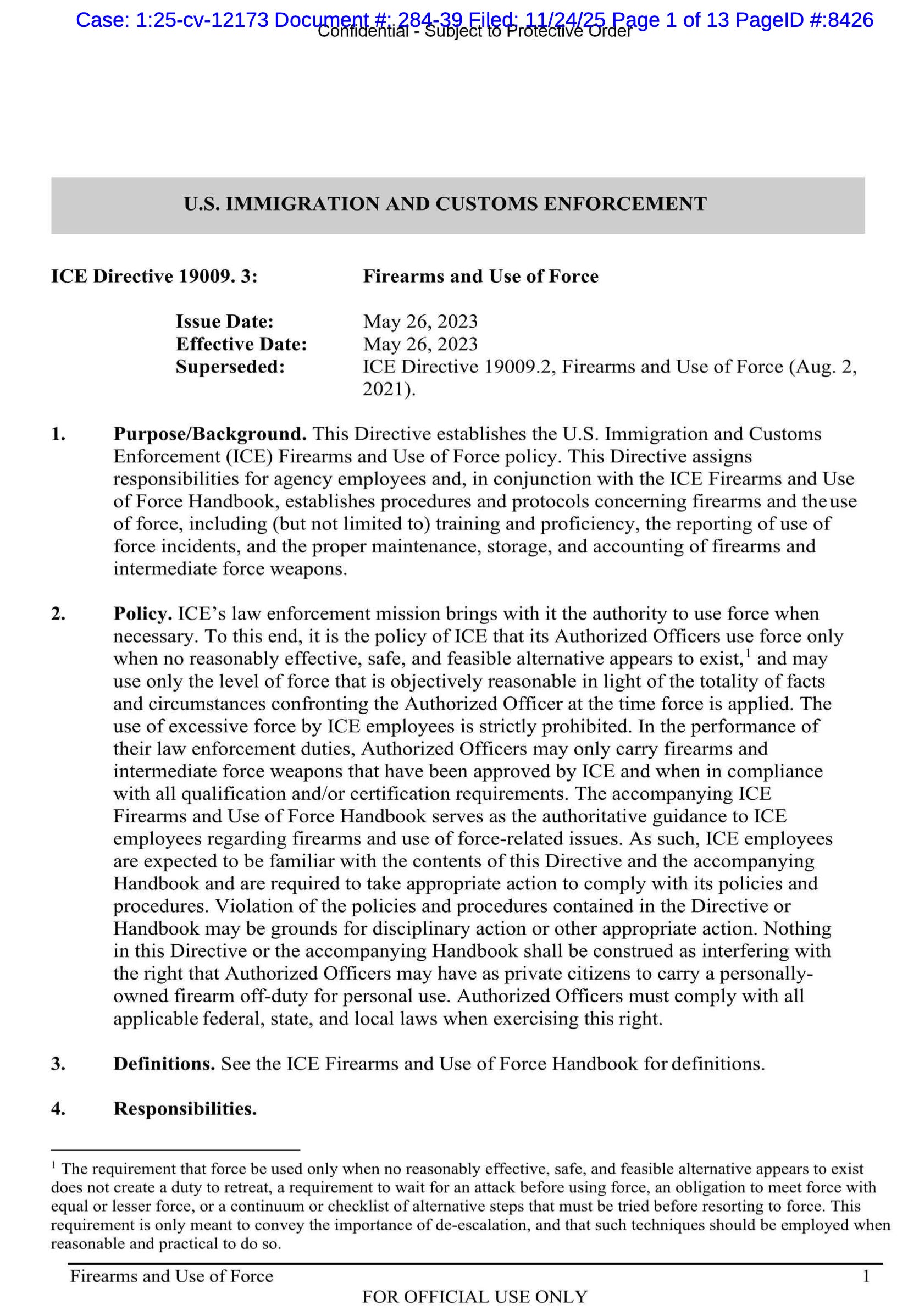
The third document is ICE’s own use of force policy, derived by the agency from homeland security’s 2023 use of force policy discussed earlier. ICE’s policy is supposedly available on its Freedom of Information Act library, but almost all of the content is blacked out. I obtained the actual unredacted version (marked “For Official Use Only”) from court records. It says nothing whatsoever to the thousands of ICE agents out there about the conditions they face that might influence their own propensity towards confrontation.
ICE more than any other federal agency represents the greatest political flashpoint in the country today, a country that looks a lot different than the Biden administration or even Trump’s first term.
ICE’s budget for enforcement and deportation was nearly tripled last year, with the goal of hiring 10,000 new agents and personnel to ramp up operations throughout the country. The widespread protests in opposition to the domestic immigration and anti- “Antifa” war have become such a concern to the administration that they even indicted a popular candidate for Congress in Illinois, Kat Abughazaleh, with the Justice Department alleging that a protest she participated in was impeding ICE operations. (She denies this.)
Now more than ever the agency could use policy guardrails for how to deal with protesters or other forms of civil unrest. Not just to hold them accountable when they run afoul of them, but even just for their own clarity.
The shooting in Minneapolis is a perfect illustration of the urgent need for not just a policy update but also for intervention from our do-nothing Congress. Reports suggest that the bevy of ICE agents involved were giving Renee Good conflicting orders, with some telling her to step out of her vehicle while others told her to leave the scene. That’s what often happens when procedures aren’t clear.
But this is about more than just a bureaucratic document that needs to be revised. An even bigger problem is that ICE has demonstrated that it has no interest in resolving conflict or looking in the mirror to see how its behavior is creating the very “dangerous situations” that homeland security says warrants the use of force.
Assistant Secretary of Homeland Security Tricia McLaughlin, in her response to my query, said: “ICE law enforcement officers are trained to use the minimum amount of force necessary to resolve dangerous situations to prioritize the safety of the public and our officers. Officers are highly trained in de-escalation tactics and regularly receive ongoing use of force training.”
The problem, first, is not whether the officers on the streets are “trained,” allowing homeland security in Washington to just wash their hands of any responsibility because they checked that box. It is that homeland security itself creates the very environment that undermines any standard law enforcement training that is being conducted. Look no further than its frankly insane social media rhetoric, which I’ve written about here.
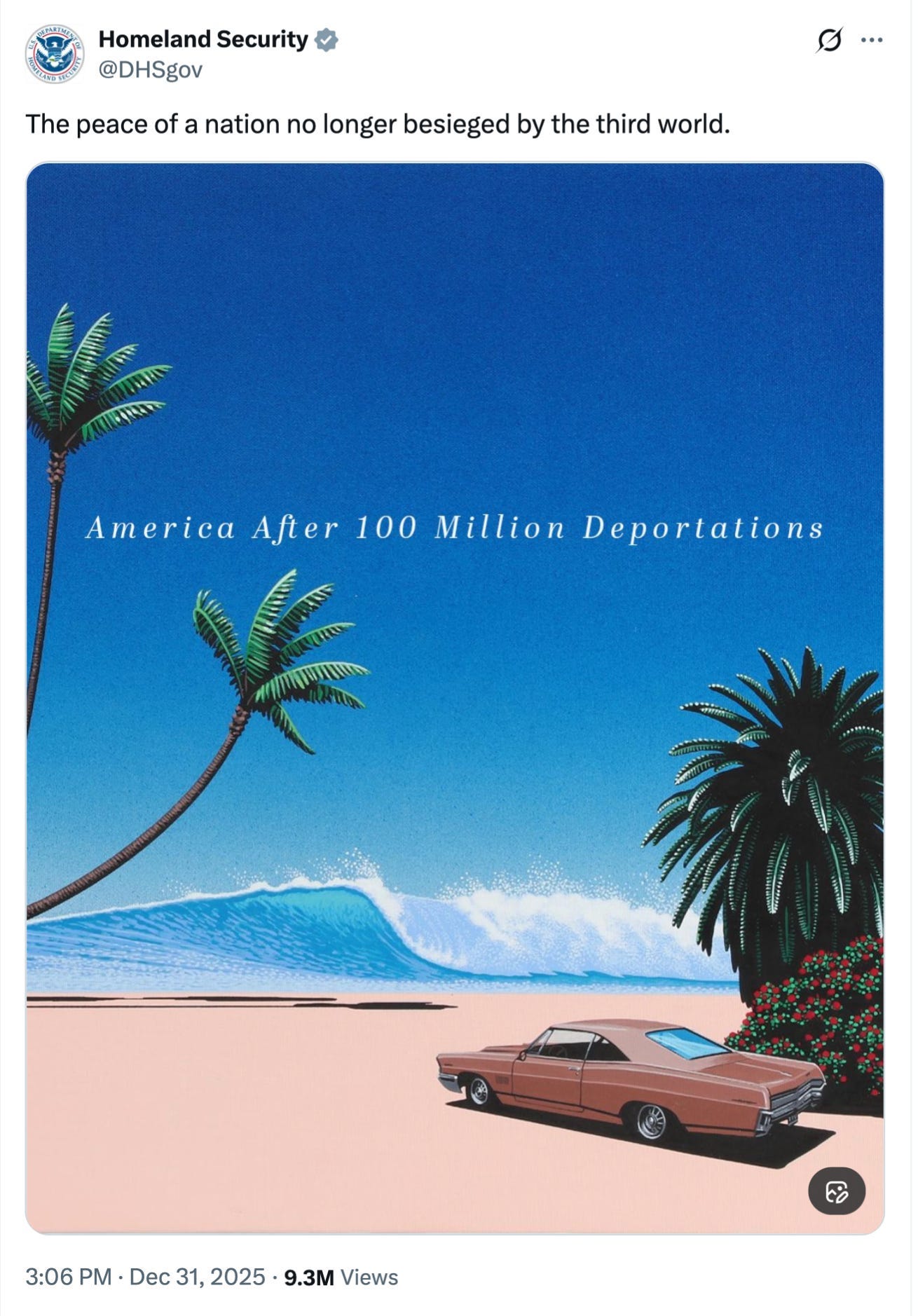
ICE has become lost on what they perceive is an American battlefield but with none of the self-examination with regard to the havoc they are creating and how to better protect its own “troops” and safeguard civil rights. It has just responded to the protests by adding more guns and acting even more like masked vigilantes. Now it has added trigger-happy to the mix.
The dangerous situation, as Ms. McLaughlin claims, was actually created by the poorly-led and improperly armed “soldiers” on the ground. There was no riot in Minneapolis and no imminent danger of loss of life to anyone.
Add to all of this that ICE officers face protest almost everywhere they openly operate. There is no campaign of “domestic terrorism” against ICE or homeland security. This is protest, pure and simple. And Minneapolis is far from the only incident.
In fact, ICE has fired on at least nine people in states across the country since September, according to data compiled by The New York Times. In every single case, the person they fired on was in a vehicle. In one of those instances, the person shot was also killed.
Under DHS’s deadly force policy, the only real question in the Minneapolis shooting is whether the ICE agent believed deadly force was necessary because Good’s car posed an imminent threat of death or serious bodily injury to him or others. In practice, that turns on what the agent reasonably believed in the moment.
That’s likely why Governor Tim Walz hinted at in his press conference that the chances of justice for Renee Good seems pretty dim.
“It feels very, very difficult that we will get a fair outcome,” Walz said. “And I say that only because people in positions of power have already passed judgment.”
Sad as this all is, the question of justice for Renee Good is separate from the question of preventing other similar tragedies. But the only way that happens is if ICE’s use of deadly force policy is acknowledged, and then if it is updated and revised to reflect America as it exists today and the conditions that law enforcement officers might face as they swagger about the country.
With the ICE shooter’s name now public, activists and the media are in a frenzy over the man responsible for this killing. I hope they also think about what we can do to stop the next one.
— Edited by William M. Arkin
No matter how anyone feels about Good, needlessly firing on a driver clearly attempting to depart without harming anyone was an unforgivably reckless action, as was evident in this case as the car tore out of control down the street to crash into a parked car. Others could have been injured or killed (including fellow agents). Even if I were an ICE goon (nearly inconceivable, but I'll try), I would be kinda pissed about this and reconsidering what kind of jackass operation I was involved in.
The American gestapo started under Bush and has been flowering ever since. Now it's a totally unrestrained and uncontrollable Frankenstein rampaging across the country. I wonder if the Department of Homeland Security could tame it, even if they wanted to.