

All three Mamdani-endorsed congressional candidates won in New York’s Democratic primary yesterday, ousting two party-backed incumbents, and proving there’s a huge appetite for something new in American politics.
The media are calling it a victory for the mayor, for the Democratic Socialists of America, for progressives, for Bernie Sanders. But I see something different. It is a victory for the common voter who is saying that they don’t want party-approved operators to represent them anymore.
Democrat and Republican alike, I find it hard to believe that the old parties will ever recover.
In New York, the Democratic party’s heaviest hitters — both from the state — lost big. House Minority leader Hakeem Jeffries endorsed the incumbents and campaigned hard against the Mamdani slate. Chuck Schumer, the other great power of New York Democratic politics and Senate Minority leader, said almost nothing about his own party’s candidates — which tells you how eager he was to distance himself from the fight. New York Democratic Governor Kathy Hochul lined up behind Rep. Dan Goldman in Manhattan.
Between the three, they couldn’t deliver a single race.
To say simply that they “lost” doesn’t do the turnabout justice. They lost the way the Knicks beat the Hawks 140-89 in this year’s playoffs. They lost bigly!
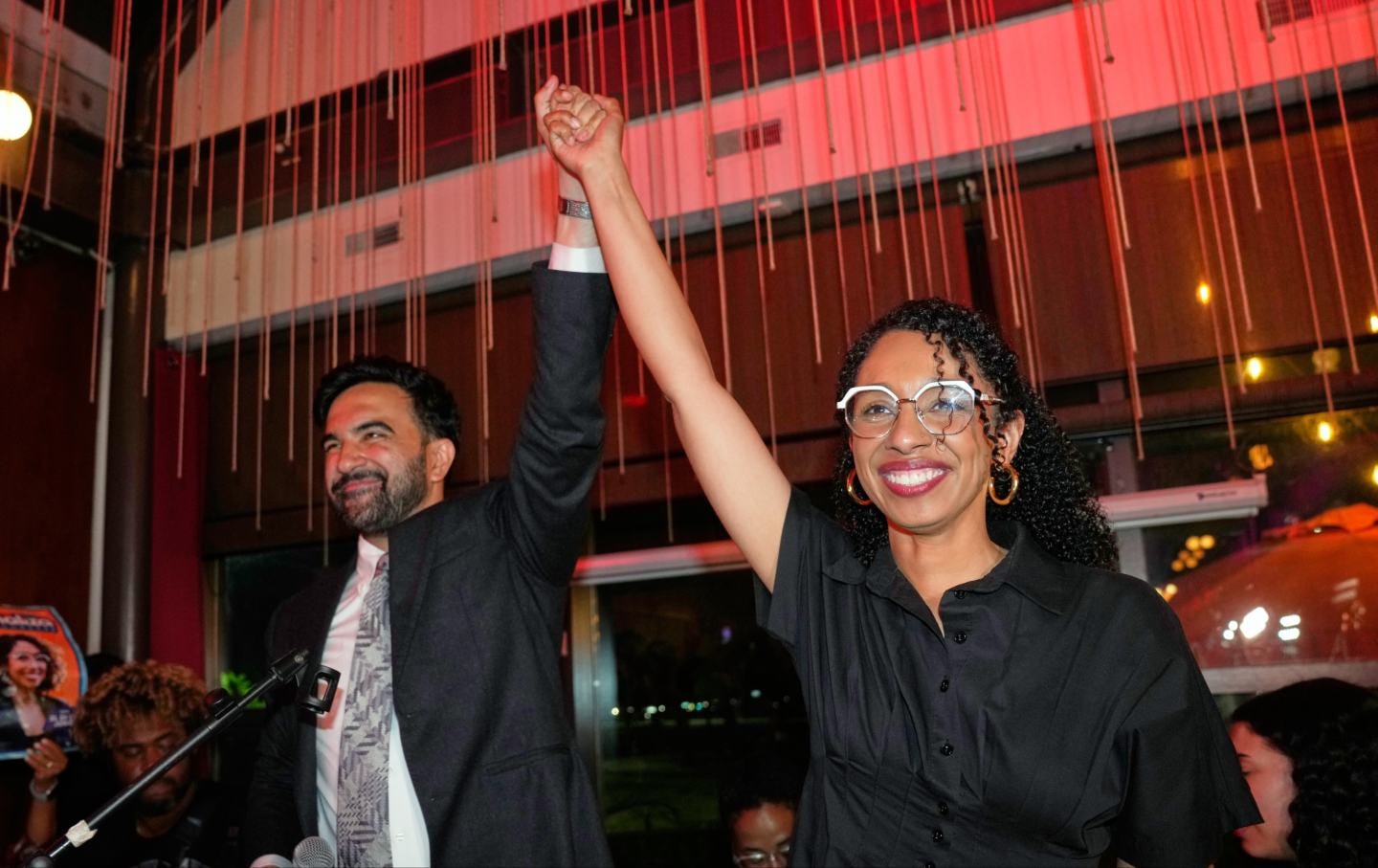
There’s already a flood of punditry working to downplay the results. The favorite move is some version of “but this is New York and it doesn’t apply anywhere else” — as if anyone is out there demanding a clone of Mamdani in, say, Wisconsin. Whether Wisconsin or Wyoming, the lesson is that the New York/DC-dominated Party’s monopoly on who people get to vote for is waning.
The point here isn’t that Mamdani “won” or New York is turning “left.” I’m saying that even in New York, ordinary voters reached past the gatekeepers, picked their own nominees, and ignored the party-approved darlings. And that matters because parties have long had a stranglehold on our politics that is corrosive to democracy.
George Washington saw the danger of excessive Party rule coming. In his Farewell Address he warned, with a clarity that today seems eerily prescient, against “the baneful effects of the spirit of party.”
Party loyalty left unchecked, he argued, “serves always to distract the public councils and enfeeble the public administration,” agitating the public “with ill-founded jealousies and false alarms.”
And he saw where it ends. The endless war between factions, Washington warned, eventually exhausts people so completely that they go looking for “security and repose in the absolute power of an individual” — handing a strongman the keys on the ruins of public liberty.
Sound familiar?
The media won’t talk about the tyranny of party control for largely the same reasons it can’t talk about the tyranny of national security: it is an appendage of it, relying on it for access and the like. If you’d like to support journalism that’s genuinely independent, subscribe below (or chip in via my GoFundMe here).
Oh, and the portion of George Washington’s farewell address excoriating the party system is worth reading (included below).
— Edited by William Arkin
Washington's Farewell Address, 1796:
I have already intimated to you the danger of parties in the State, with particular reference to the founding of them on geographical discriminations. Let me now take a more comprehensive view, and warn you in the most solemn manner against the baneful effects of the spirit of party generally.
This spirit, unfortunately, is inseparable from our nature, having its root in the strongest passions of the human mind. It exists under different shapes in all governments, more or less stifled, controlled, or repressed; but, in those of the popular form, it is seen in its greatest rankness, and is truly their worst enemy.
The alternate domination of one faction over another, sharpened by the spirit of revenge, natural to party dissension, which in different ages and countries has perpetrated the most horrid enormities, is itself a frightful despotism. But this leads at length to a more formal and permanent despotism. The disorders and miseries which result gradually incline the minds of men to seek security and repose in the absolute power of an individual; and sooner or later the chief of some prevailing faction, more able or more fortunate than his competitors, turns this disposition to the purposes of his own elevation, on the ruins of public liberty.
Without looking forward to an extremity of this kind (which nevertheless ought not to be entirely out of sight), the common and continual mischiefs of the spirit of party are sufficient to make it the interest and duty of a wise people to discourage and restrain it.
It serves always to distract the public councils and enfeeble the public administration. It agitates the community with ill-founded jealousies and false alarms, kindles the animosity of one part against another, foments occasionally riot and insurrection. It opens the door to foreign influence and corruption, which finds a facilitated access to the government itself through the channels of party passions. Thus the policy and the will of one country are subjected to the policy and will of another.
There is an opinion that parties in free countries are useful checks upon the administration of the government and serve to keep alive the spirit of liberty. This within certain limits is probably true; and in governments of a monarchical cast, patriotism may look with indulgence, if not with favor, upon the spirit of party. But in those of the popular character, in governments purely elective, it is a spirit not to be encouraged. From their natural tendency, it is certain there will always be enough of that spirit for every salutary purpose. And there being constant danger of excess, the effort ought to be by force of public opinion, to mitigate and assuage it. A fire not to be quenched, it demands a uniform vigilance to prevent its bursting into a flame, lest, instead of warming, it should consume.
Nailed it!
“It is a victory for the common voter who is saying that they don’t want party-approved operators to represent them anymore.“
“Democrat and Republican alike, I find it hard to believe that the old parties will ever recover.”
I hope they don’t, they both deserve to die, and neither one will ever willingly give up their power.
And thanks for the George Washington quote Ken. Human nature has not changed in 250 years and the founding fathers’ ideas and principles are still very relevant today.