
“We have a nice little database and now you’re considered a domestic terrorist,” a masked federal agent taunted a protester filming him in Maine last week.
Department of Homeland Security spokesperson Tricia McLaughlin’s response was firm: “There is NO database of ‘domestic terrorists’ run by DHS.”
There’s just one problem: She’s lying.
Two senior national security officials tell me that there are more than a dozen secret and obscure watchlists that homeland security and the FBI are using to track protesters (both anti-ICE and pro-Palestinian), “Antifa,” and others who are promiscuously labeled “domestic terrorists.”
I can reveal for the first time that some of the secret lists and applications go by codenames like Bluekey, Grapevine, Hummingbird, Reaper, Sandcastle, Sienna, Slipstream, and Sparta (including the ominous sounding HEL-A and HEL-C reports generated by Sparta).
Some of these, like Hummingbird, were created to vet and track immigrants, in this case Afghans seeking to settle in the United States. Slipstream is a classified social media repository. Others are tools used to link people on the streets together, including collecting on friends and families who have nothing to do with any purported lawbreaking.
There’s practically nothing available that further describes what these watchlists do, how large they are, or what they entail.
“We came out of 9/11 with the notion that we would have a single ‘terrorist’ watchlist to eliminate confusion, duplication and avoid bad communications, but ever since January 6, not only have we expanded exponentially into purely domestic watchlisting, but we have also created a highly secretive and compartmented superstructure that few even understand,” says a DHS attorney intimately familiar with the subject. The attorney spoke on the agreement that their identity not be disclosed.
Prior to 9/11, there were nine federal agencies that maintained 12 separate watchlists. Now, officially there are just three: a watchlist of 1.1 million international terrorists, a watchlist of more than 10,000 domestic terrorists maintained by the FBI, and a new watchlist of transnational criminals, built up to more than 85,000 over the past decade.
The new domestic-related watchlists—a set of databases and applications—exist inside and outside the FBI and are used by agencies like ICE and the Border Patrol to organize the Niagara of information in possession of the federal government. Collectively, they create ways to sort, analyze, and search information, a task that even artificial intelligence has failed to conquer (so far).
Among other functions, the new watchlists process tips, situation reports and collected photographs and video submitted by both the public and from agents in the field; they create a “common operating picture” in places like Minneapolis; they allow task forces to target individuals for surveillance and arrest; and they create the capacity for intelligence people to link individuals together through geographic proximity or what is labeled “call chaining” by processing telephone numbers, emails, and other contact information.
Administration officials have alluded to all of this, though contrary to the Hollywood idea of some all-seeing eye, actual government watchlists are more a patchwork system of lists and applications, each of which might have individual justification or even legitimate purpose to aid law enforcement but overall form the basis for massive violations of American civil rights.
“One thing I’m pushing for right now … we’re going to create a database where those people that are arrested for interference, impeding and assault, we’re going to make them famous,” Tom Homan, Trump’s border czar, told Fox News earlier this month.
Watchlists in general fly in the face of the spirit of the Constitution and the protections it’s supposed to embody against unreasonable search and seizure, and relating to the right of privacy.
“Fairness can rarely be obtained by secret, one-sided determination of facts decisive of rights,” Supreme Court Justice Felix Frankfurter said of a Justice Department list of subversives during the Red Scare. “Secrecy is not congenial to truthseeking.”
Now, the national security community has developed an interlocking set of lists and applications that are secret not just to the public but opaque to most who toil in the federal agencies themselves. Asked about the watchlists, a Border Patrol agent recounted to me how they punch their data into their own proprietary application, not really knowing what happens after that.
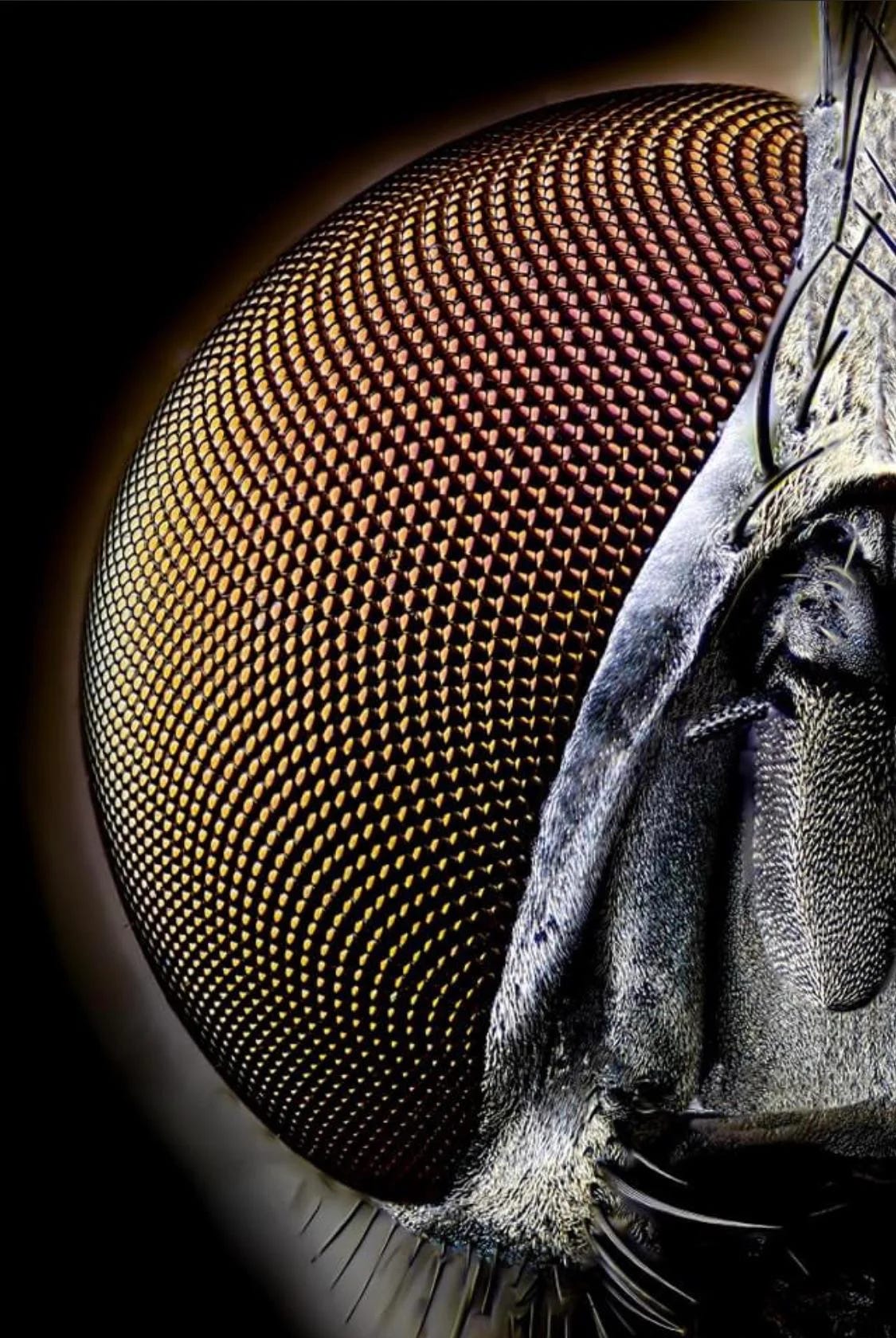
Again, these watchlists aren’t the all-seeing eye of Sauron that many imagine. They’re more like the compound eye of a fly, a fragmented array of lenses (over 3,000 per eye in the common housefly!) that collectively form a mosaic. That mosaic—the ability to unify all the disparate lists into one master picture—doesn’t yet exist, sources tell me. That, however, is the direction we’re going, especially with software packages like Palantir that can be customized to aggregate all that is collected.
“We do of course monitor and investigate and refer all threats, assaults and obstruction of our officers to the appropriate law enforcement,” says McLaughlin. “Obstructing and assaulting law enforcement is a felony and a federal crime.”
Impeding federal law enforcement has emerged as the Trump administration’s primary justification for actions against people like Renee Good and Alex Pretti.
As part of its new effort to support its operations in places like Minneapolis and Los Angeles, the Homeland Security Department, working with the Justice Department, has started more methodically tracking what it calls “aggressive protesters.” According to one senior official, this is a new designation the agency uses to describe the supposed threat posed by people on the streets.
Both Good and Pretti were considered aggressive protesters; in Good’s case, for criticizing ICE officers while operating a vehicle; and in Pretti’s case, getting up close to immigration officers while filming them.
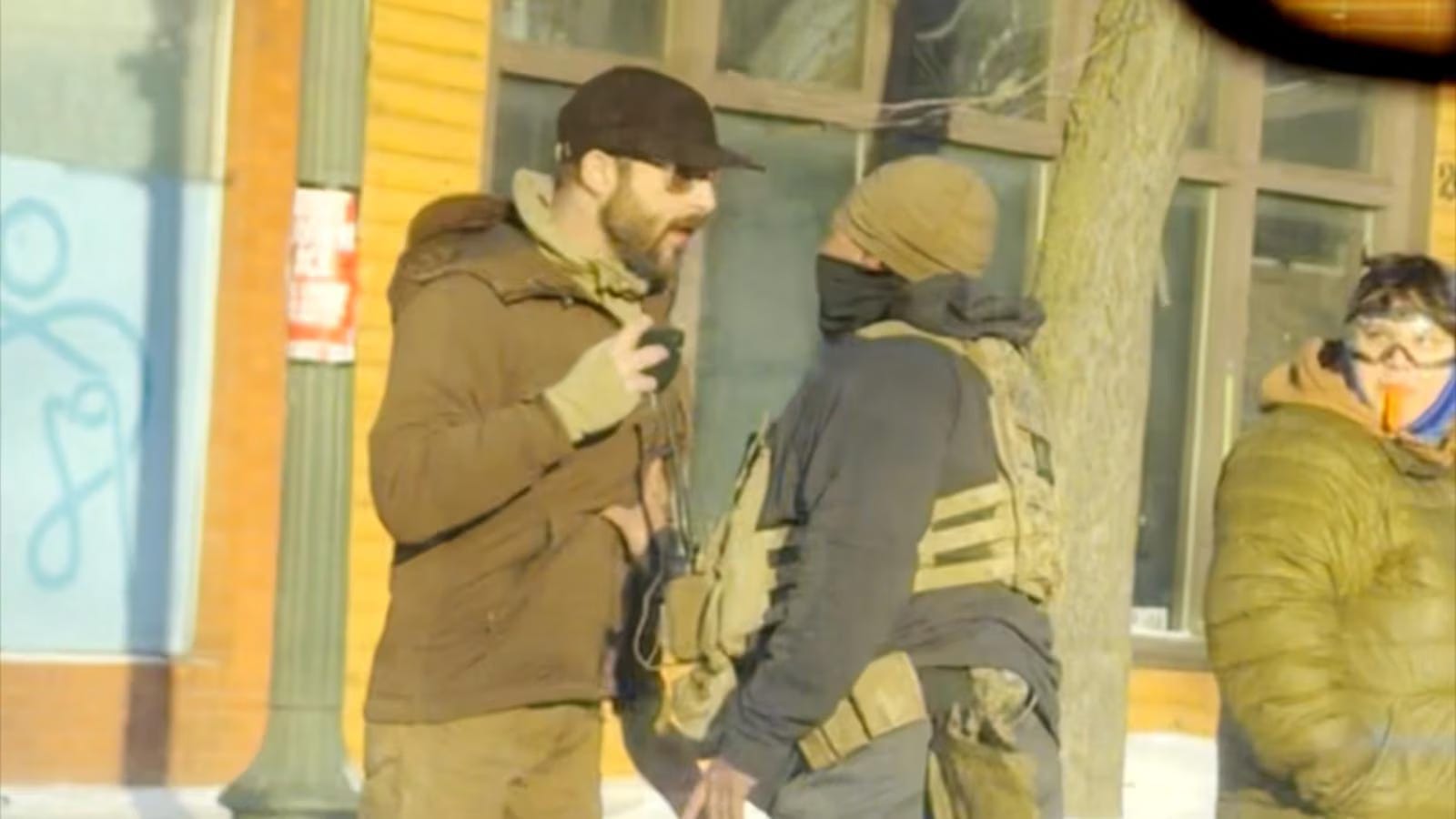
Deputy Attorney General Todd Blanche alluded to the term in a recent CNN interview, saying: “He [Alex Pretti] was not protesting peacefully—he was screaming in the face of ICE, he had a phone up right into ICE’s face. You tell me: is that protesting peacefully?”
When the CNN host pointed out that Pretti wasn’t violent, Blanche actually agreed, but went on to argue that there’s a third category for protest that is neither violent nor peaceful.
“I did not say that he was violent,” Blanche interjected, adding: “I said that he was not protesting peacefully.”
When I asked civil liberties experts what might be the legal justification for the expanded watchlisting, Rachel Levinson-Waldman, the Brennan Center’s Liberty and National Security Program director said that NSPM-7 and Attorney General Pam Bondi’s December 5 memo implementing the presidential directive “might be their justification.”
Under the Privacy Act, Levinson-Waldman explains, the government is prohibited from collecting and retaining information about Americans exercising their First Amendment rights. There can exceptions to that, but the question is whether DHS and FBI have articulated which exceptions they believe apply here.
The DHS lawyer, who helped to reveal the many secret watchlists and applications that are now being built and used to create the new American dragnet, says that sorting out the data being collected—rather than some explicit order to collect the data—is what’s driving the process.
“We over collect and everyone agrees we should create this or that list or application to wrestle the information to submission lest we miss something important,” the lawyer said. “So the data people do their thing and pretty soon you actually have Big Brother.”
A senior intelligence official, who confirmed the existence of the watchlists described earlier, characterized the problem another way.
“Lists of this and that—this social media post, that video taken of someone videoing ICE, the mere attendance at a protest—gets pulsed by federal cops on the beat to check for criminality but eventually just becomes a list itself of criminality, with the cops thinking that indeed they are dealing with criminals and terrorists.”
“Watchlists, and the whole watchlisting process, should be as transparent as possible, not the other way around. If we don’t explore more why all of these secret lists exist, even more of an environment of paranoia on the ground and more tragic killings.”
— Edited by William M. Arkin
One wonders where Palantir's tech is at in their attempt to link all of the data together.
I also cannot stress that being tracked on a list for attending protests - which is a first amendment right - is incredibly comcerning. Attending protests and posting disagreements online are not crimes.
But what do I know, I'm probably on those lists. 🤷
Amazing work and thank you. That’s why I subscribe.