
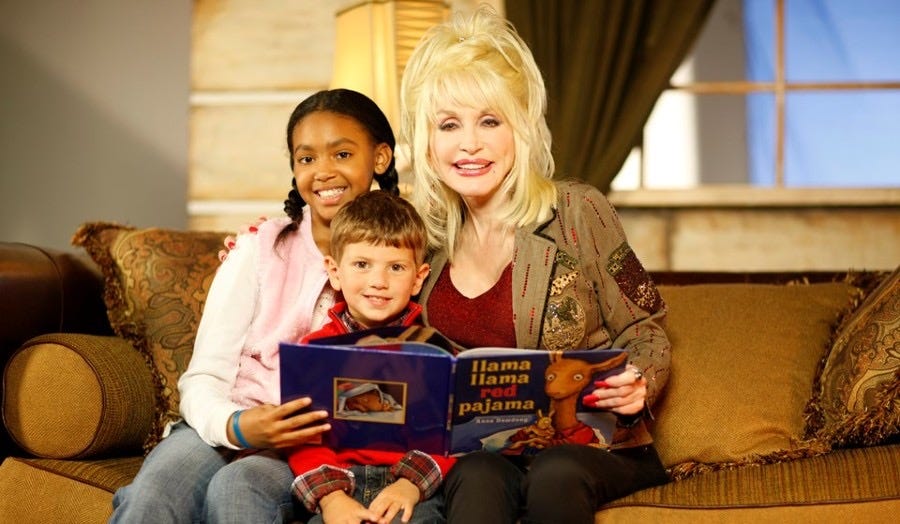
Dolly Parton had a power no president does: the ability to influence basically anyone for the better.
"I am not political,” she once famously said. “I'm more about the person and about the message.”
Compare that to the brute force logic of our politics, where the prevailing strategy is to win the White House, run up the score in Congress, and bulldoze the opposition.
Parton showed another way.
In a world of team red and team blue, Dolly was platinum. She understood that the most valuable substance is consensus; and like platinum, it’s precious because it’s rare. It can’t be forced and must be gathered with patience and care. Dolly managed this by walking a tightrope.
An early defender of gay marriage, she made her case not by shaming opponents but with playful self-deprecation, quipping: “Why shouldn’t they get to be as miserable as the rest of us?”
She was a philanthropist but didn’t virtue signal, instead preferring to remain anonymous. For decades, Parton anonymously covered the cost of school band uniforms at high schools across Tennessee, never publicizing the gesture or attaching her name to it. (It only came to light when observant fans on social media noticed a pattern of unexplained donations and connected the dots back to her.)
Her philanthropy was practical and without ceremony. In her native Appalachian Tennessee, she launched the “Buddy Program,” giving 7th and 8th graders $500 cash from her own pocket if they graduated—slashing the local dropout rate from 35% to 6%.
The daughter of a poor Tennessee sharecropper, she never forgot where she came from while never condescending to it either. She founded the Imagination Library in tribute to her father, whom she called “the smartest man I have ever known,” but who never had the opportunity to learn to read and write. The program has since mailed more than 300 million free books to children.
Parton’s ease across worlds seemed to rest on a genuine respect for other people’s humanity, including those whose lives and work were far removed from her own. After her death, Eminem revealed that she had privately written to him following their 2022 induction into the Rock & Roll Hall of Fame. Though she acknowledged that she did not know much about rap, Parton told him: “No matter how complex your world may be, just know you are very special and touch people in ways you don’t even know.”
The most frustrating thing about journalism, to me, is when a story only lands with the side the facts happen to flatter. Dolly could reach all kinds of people. Now that she’s gone, I can’t think of anyone who still does. I certainly don’t, and it isn’t for lack of trying.
“If you don’t like the road you’re walking, start paving another one,” Dolly once said.
I’m going to keep trying.
— Edited by William M. Arkin
Something’s truly gone wrong with this world, when Donald Trump is the president, and Dolly Parton wasn’t.
My kids received books from her program, and they were really great children's books. I'm not much of a celebrity lover, but I have a tiny exception for Dolly. Rest her soul. 💜